High pressure washing — Recycling and Sustainability
 At the heart of our high pressure washing and pressure washing services is a commitment to responsible waste management and the creation of an eco-friendly waste disposal area. We design our site waste flows so run-off, debris and solids are separated, captured and routed to approved treatment or recycling streams. Our high-pressure cleaning crews follow strict containment protocols to minimise contamination and to maximise recovery of recyclable materials.
Our sustainability approach covers everything from site set-up to the end-of-life handling of residues from jet washing and power washing activity. We prioritise water recycling on-site, sediment traps for grit and oils, and use biodegradable detergents where required. By treating wash water and diverting solids to the right destination, we reduce environmental impact and support a sustainable rubbish gardening area for community reuse.
 We have set a clear recycling percentage target: 75% of all non-hazardous waste generated by our pressure-cleaning operations will be diverted from landfill by the end of 2026. This target covers packaging, recovered timber, metals, plastics and inert materials from surface cleaning and restoration. To meet it we track streams weekly and report progress against the target, adjusting practices such as dewatering, on-site segregation and reuse to improve outcomes.
Local transfer stations, borough waste separation and responsible disposal
We partner with local transfer stations and household recycling centres to ensure materials are handled under licensed procedures. Our teams use designated civic amenity sites and transfer points for sorted loads — glass, paper/card, mixed plastics, metals and organic green waste are taken to appropriate local facilities. Many boroughs operate council-specific separation systems; we align with each borough's approach to waste separation, using separate containers for food/organic waste, recyclable streams and residual waste to match local regulatory requirements.
 When dealing with wash water and potential contaminants, we follow a chain-of-custody model: captured liquids are tested, treated and then either discharged under licence or taken to a permitted wastewater treatment facility. Solids from sieving and sedimentation are assessed for recycling potential — for example, reclaimed concrete, brick fragments and inert aggregate can often be repurposed for landscaping or passed on to local reprocessing centres.
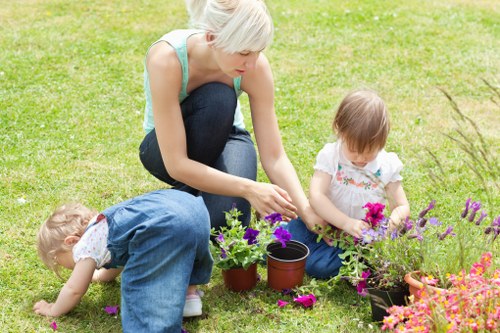
To keep our sustainable rubbish gardening area productive, we divert suitable organic matter to community composting schemes and municipal green waste processors. Reclaimed timber and pallets are routed to repair and reuse streams, supporting local circular-economy projects rather than being consigned to disposal.
Partnerships, charity redistribution and low-carbon transport
 We work closely with charities and community organisations to maximise reuse. Items recovered from clean-up work that are reusable — such as intact furniture, planters, bricks and pallets — are offered to local charities or community projects. Partnerships with community reuse centres and social enterprises help turn materials from pressure-cleaning works into resources for neighbourhood gardening initiatives and construction training programmes.
 Our vehicle fleet is transitioning to low-carbon vans to reduce scope 1 emissions from site visits. We deploy electric vans where charging infrastructure allows and use hybrid or HVO-capable vehicles for longer routes. Route optimisation software, combined with telematics, reduces mileage and idling, cutting emissions while maintaining service reliability for jet washing and power washing operations.
In addition to fleet upgrades, we invest in staff training on sustainable site practice: how to segregate recyclables properly, how to prepare loads for transfer stations and how to document waste movements. Clear waste manifests and photo-records ensure transparency for both clients and regulators.
Key recycling activities we prioritise:
- Segregation on-site of glass, paper/card, metals and mixed plastics following borough collection standards.
- Capture and treatment of wash water with reuse where permitted, reducing fresh water demand.
- Recovery of inert materials (bricks, concrete, aggregate) for landscaping and reuse.
- Diverting green waste and organics to community composting and municipal processors.
- Donation routes for reusable items via charity partners and social enterprises.
We maintain a policy of continuous improvement: targets are reviewed annually and our recycling percentage target is supported by investments in improved containment, sorting equipment and strategic partnerships with transfer stations and civic facilities. This ensures that our pressure washing, high pressure washing and power washing activities align with local sustainability goals and borough-level waste separation schemes.
By combining technical controls, local partnerships and low-carbon logistics, our service model creates an eco-friendly waste disposal area and a thriving sustainable rubbish gardening area — turning what used to be waste into value for communities.